“Pranchiyettan …” is, I believe, director Ranjit giving the finger to those who had labeled him a “Hinduvta” director after a series of movies such as Devasuram, Ravanaprabhu, Nandanam, Prajapathy etc.
There have been several movies based on the Kottayam Christian milieu; however movies set in Thrissur are rare. Other than Padmarajan’s Thoovanathumbikal, I can remember no other movie that has used the town and its slang as an important facet in the movie.
It is refreshing that the movie has no “villains”. Siddhique is portrayed as Pranchi’s main rival, but Ranjit has resisted the temptation of having either the hero or villain import a dozen ruffians from several different places, and indulge in an outlandish fight sequence.
The whole bit about hints around the hypocritical lives lead by Siddhique and Khushboo was uncalled for – a cheap shot, really. Could Pranchi not find his happiness even as his childhood sweetheart and her husband lived happily too?
The whole speech sequence was awesome. It reminded me a bit of the iconic “balatkaar” sequence from “3 Idiots”; but the one in “Pranchiyettan…” was more about the fear of public speaking.
The whole concept of “Padmashree-chasing” was a riot. Ranjit clearly has a ball here, with digs at all and sundry.
Jagathy could have been avoided. He added absolutely nothing to the movie, and did nothing new (other than demonstrate a few Yoga poses) either.
Finally, what does one say of Mammootty? This amazing performance is most un-Mammootty-like; in fact it is almost Mohanlal-esque, except for the spotless Thrissur slang (which I think Mohanlal could not have quite managed). We all know that Mammootty excels in statuesque roles, but to see him excel as the self-deprecating Pranchi reminds us that the veteran still has unexplored depths. More innovative scripts please!
The dearth of interesting story lines in Malayalam cinema continues. As a result, there are more sequels being planned in Mollywood:
Pranchiyettan vs. Manickyam: Mammootty in an exciting double role re-enacting his memorable roles from the two blockbusters. A special wig has been ordered from Washington D.C. Osama: Major Ravi exposes how the real Osama assassination went down in 2011. The focus of the story is Brigadier Mahadevan (Mohanlal), who had personally assisted the US SEAL team in bringing down the fugitive, but ended up losing credit in the end.
CBI Umpteen: K.Madhu, S.N.Swamy, and Mammootty reunite to reprise Sethurama Iyer, one of the most memorable characters of Malayalam cinema.
Indhuchoodan: Amal Neerad brings back the iconic Indhuchoodan. Alphonse is doing a re-mixed version of the Narasimham theme music that is being rendered by Jassie Gift.
Ormayundo Ee Mukham: Suresh Gopi is back as Bharatchandran I.P.S, the character that elevated his career. Renji Panicker directs, and promises a thriller that reflects the latest political happenings in Kerala.
Rajavinte Makan: Shaji Kailas remakes this Mohanlal classic with Prithviraj in the lead.
20-80: Prithviraj Sukumaran stars and produces the sequel to 20-20, and re-unites the entire Malayalam film industry. Dileep will appear in a special item number sung by Aditya Narayan as an additional attraction. The great-grandfather of Malayalam cinema, Mr. Joshiiee, will be directing the sequel as well.
Ranjith (along with Blessy, to a lesser extent) seems to view himself as the torchbearer of quality Malayalam cinema for the future – not that this is a bad thing; amongst execrable fare like “Alexander-The Great”, “Pappi Appacha” and “Pokkiriraja”, Ranjith’s recent films stand tall. “Kerala Café” is a rare conceit for Malayalam cinema – a collection of short films by an ensemble of directors. The last time we saw several directors at the helm was for “Manichitrathazhu”, which delighted the masses and critics alike. Unfortunately “Kerala Café” is no “Manichitrathazhu”, but is nevertheless an interesting and brave attempt.
M.Padmakumar’s “Nostalgia” focuses on the hypocrisy of a Gulf expatriate (Dileep) who waxes eloquent on his homeland while outside the country, but can only find cause of complaints once in Kerala. Dileep pitches in with a decent performance, but the subject lets him down badly. Not the best way to begin a collection of short stories!
“Island Express” was weird – I need to watch this one again. It probably did not help that I watched this one after a couple of beers on a hot Chennai night! My apologies to writer-director Shankar Ramakrishnan, who has clearly put a lot of thought into over-complicating this short story!
With “Lalitham Hiranmayam”, Shaji Kailas proves beyond doubt that both Suresh Gopi and he are best suited to the loud, overbearing, abusive cop dramas that they have become famous for ever since “Ekalavyan” and “Commissioner”. Suresh Gopi has a perpetual muddled expression here, perhaps reflective of the director’s state of mind. The actresses do what they can to salvage this short film on the emotional consequences of adultery, but to no avail.
“Mritynjayam” shows all signs of a forced entry into this collection, perhaps to include the “horror” genre in this ensemble. While the director Uday gets the mood right, he falters in the selection of the plot, which is not fresh at all. Fazil's son looks a lot less effeminate here though, after his previous outing in "Kaiyyetha Doorathu".
“Happy Journey” by Anjali Menon is – thankfully - refreshing fare. It is a commentary on how easily the average man on the street can be scared with the mere mention of a bomb. Jagathy plays his role with aplomb. Anjali Menon – take a bow!
B.Unnikrishnan helms “Aviraamam”, which is a take on the effects of the economic recession on a family. The actors – Siddhique and Shweta share a warm camaraderie – rescue the weak plot. Moral of the story - one should not expect much from the director of “Madambi“, “IG” etc.
“Off-Season” from Shyamaprasad is once again a take on the economic recession, but an unexpectedly humorous one. Right from the opening scene (a laugh-out-loud motif of a recent Oscar-winner) to the “remixed” version of an eternal classic, this short film entertains. Suraaj is his usual loud, wise-cracking self, but eminently likeable for a pleasant change.
Anwar Rasheed directs the best short film of the collection - “Bridge”. This is one of those few times where I had the experience of watching an Indian (short) film of international quality. The director is scores visually, aesthetically, and – most importantly – conceptually. It would be a pity if Anwar Rasheed goes back to directing mindless potboilers like “Rajamanickyam”, “Chotta Mumbai” etc when he clearly has the potential to do so much more.
Revathy crafts “Makal” - a story of poverty and exploitation that is a tad manipulative, but nevertheless effective. The story begins (spoilers ahead) with the close-up of a waiter @ Kerala Café (which is the common denominator across all the stories, of course), who is then revealed to be a girl set up for adoption. The director manipulates the viewer into a sense of security, before taking the breath out of you by delivering a blow to the solar plexus.
Lal Jose’s “Puram Kazhchakal” ends “Kerala Café” with a flourish – the director just lets the actors (especially Mammootty) be, and cranks up the expectation levels before delivering a wholly unexpected, heart-touching finale.
Verdict: A laudable attempt. Watch it for “Bridge”, “Makal” and “Puram Kazhchakal”.
College Kumaran: With Mohanlal in the title role. Perhaps a better title would have been College Kumarante Achchan.
Sound of Boot: Very apt, as the audience 'booted' it out of the theatres without a qualm.
De Ingottu Nokkiye: Nobody gave the movie even a first glance, despite the director trying to milk some controversy from some canned scenes.
Innovative Concepts:
An ex-major who has resigned his post (with no apparent repercussions) and opted to run the college canteen, with occasional forays into activities like coaching students, taking on corrupt politicians, helping out orphans in distress, bashing up stray goondas etc. Extremely original.
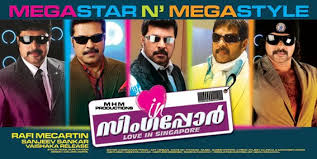
A love story starring Mammootty prancing around in leather outfits in Singapore, I presume. There's even a fashion show where M struts his stuff - (s)exciting, huh?
Suresh Gopi in yet another 'different' role, this time as a sanyasi detective - bet even Agatha Christie couldn't have thought of this one.
Dileep (Mulla) is a hardened criminal, who is forced to care for a baby. Within some days, the baby changes his behavior, arousing and developing the sense of empathy and humanity in the cold blood killer. Very, very original.
The English Scholar Award:
Move over, Suresh Gopi and Mammootty - M.G.Sreekumar is here. With buzz words like 'Audien' and 'Criticization', rumor has it that Renji Panicker is planning to cast M.G.Sreekumar in his latest abusive saga of cussing, swearing, and filpping the bird.
Best Director:
Balachandra Menon for De Ingottu Nokkiye (roughly translated to Hey! Look Here!). Not content with writing and directing this neo-classic, the director also appeared on several channels accusing others of 'chopping' his creation. Never miss a trick for publicity, huh?
Comeback of the Year:
Jayaram should have been a cakewalk for this reward; he had his first post-millennium hit, riding on the petite shoulders of Gopika, and worked hard to revive some of his old mimicry tricks.
However there was another unexpected comeback in 2008 that had audiences whistling in joy, and dancing in the aisles. Yes - I am refering to the one actor in the history of Malayalam cinema who encompassed all emotions into one expression; who modulates his dialogue delivery like no other; who screeches like a jackal when delivering the only authentic karate kick of Malayalam cinema - none other than Babu Anthony in 20-20.
Performances of the Year:
Mohanlal in College Kumaran lends new expression to the word sleepwalking. In a role he is clearly disinterested in, Lal barely goes through the motions - leading to the question why exactly he signed the movie.
Mammootty in Annan Thambi on the other hand, is loud, ebullient and thoroughly irritating - I almost prefered the sleepwalking Lal. I can at least figure out why Lal walked through CK in a daze; but why Mammootty invested all his energy into a movie as inane as AT defies logic.
Old Wine in New Bottle Award:
Unanimously to Sathyan Anthikkad for re-inventing, re-polishing, re-painting, and re-selling the same wheel over and over again.
It is after a long time that one sees Mohanlal really sink his teeth into a role worthy of his talent. Although 'Paradesi' ends up being a tad disappointing, the performances alone make this movie a worthy watch.
As the title indicates not-so subtly, the tale is about Indian Muslim expatriates who live a life of misery and fear ever since the partition. Instead, the director opts to iterate through a string of characters, tracing their lamentable history through the weary eyes of Moosa (Mohanlal). Despite being treated to a virtual acting exhibition by a list of Malayalam actors, being subjected to different variations of the same story again and again does take its toll on the viewer. A little bit of subtlety would have gone a long way in raising this film to another level altogether, I couldn't help but think. In what ought to have been a landmark role, Mohanlal is curiously apathetic as the young Moosa - lackluster would be the one would be tempted to use if it were not for the marvelous turn Mohanlal turns in as the aged, harried Moosa. In both body language and voice modulation, Mohanlal is the aged Moosa personified - the one drawback is the apparent inability to imbibe the Malabar slang. Paternally affectionate with the young journalist, pensive as he discusses legal matters with the policemen and lawyers, despairing as he is banished yet again, cringing and pathetic as he attempts to hide from the policemen - there is apparently no emotion that Mohanlal cannot conjure up for Moosa. It is a pity that Mohanlal the actor is constantly drowned in tripe like Madambi and Hello.
Shweta Menon is truly a surprise as Moosa's wife, Aamina. It is a shocker of a performance - made all the more effective more by sheer shock value than actual histronics, one suspects. But nay; the very thought is cruel and unfair to an extremely competent Shweta.
There are quite a few effective cameos in the movie - Jagathy, Sidhique, Padmapriya, T.G.Ravi, Cochin Haneefa etc. Jagathy yet again reveals what an outstanding talent he really is - after the likes of Mazha and Nottam in recent times, he chews up the scenery as the mentally unhinged Abdul Rehman. It is a pity that this fine actor is more often than not relegated to asinine comic roles. The Lakshmy Gopalaswamy story was not effective though, and the stark depiction of police brutality was completely uncalled for. The akwardness between Moosa and Khafija was a deft touch - all the more so since it left unexplained.
It is directorially that the film falters. All the stories / characters are but clones of one another, and one could see the end coming a thousand miles away (though Mohanlal reserves his best for the final few scenes). A dash of subtlety and some firm editing might have done wonders to make a good film better.
Verdict: Laudable effort, but could have been so much better.
Back after a brief hiatus - was in Kerala for a vacation, and more importantly, for my sister's wedding. It was almost more hectic than regular office hours, but then that's another story. A couple of days before returning, I landed up at the familiar doorstep of Empire Videos at Poothole, and successfully procured a couple of Padmarajan DVDs. Its been a long time since this post, and I'd decided to re-visit some of these masterpieces anyway - especially the ones I haven't seen in a long time.
Aparan (The Other) narrates the rather sinister story of Vishwan (debutante Jayaram), who's forced to come to terms with the fact that he has an unsavory lookalike. He comes to know of this in an unexpected manner, when he is attacked by two strangers at a hotel. The police refuse to buy his explanation that he's an innocent bystander, and Vishwan is hauled off the nearest police station. By sheer chance, the inspector in charge happens to be an old friend (Mukesh), and Vishwan is released. After some more unpleasant incidents that result in Vishwan losing his job, he is forced to seek out his so-called 'twin' to confront his nemesis. Little does he know, though, what fate has in store for him.
As usual, Padmarajan writes an extraordinary screenplay . Many scenes stand out - like the one where Shobhana accuses Jayaram of trying to molest her, the scene when Jayaram 'becomes' Uthaman and claims money for a murder cold-heartedly, and of course the chilling climax. Like many other screenplays by Padmarajan, this too contains several layers. One aspect to the screenplay, of course, is the age-old adage that good and evil are but two sides of the same coin. In fact, I felt that this was the central premise of the move. Despite not showing the 'other' character until the very end, his shadow hangs over the entire movie, like an undercurrent of evil. Its incredible how Padmarajan manages to bring in this 'dark' feeling without resorting to familiar devices like dark lighting, loud music etc; he achieves it nevertheless.
Another aspect to the movie is how easy the protagonist finds it to 'change' his persona to that of his lookalike, the antagonist. There's a scene here, where Jayaram tries to hang around shady localities, dress in dark colors like his lookalike, and even leer at women. I thought this could have been done much better - by the director himself, by the music director in particular (who chooses to put in some dumb rock 'n' roll music or some such crap as the BGM), and of course by Jayaram. In fact, the possibility of the scene reminded me of the 'mirror' scene in Mohanlal's Chenkol (The Staff); Mohanlal expresses, almost magically, both the demons in his mind that are threatening to break free, and the sheer helplessness as he feels his life succumbing to fate once again (its truly a magical scene, and one of my favorite Mohanlal scenes, ranking right up there along with the 'murder' scene in Sadayam - With Mercy). Of course, Mohanlal has forgotten more about acting than Jayaram ever dreamt of, so that's no just comparison. However, I have to admit, this was one of the scenes in the movie that disappointed me. The blurring of the lines between good and evil could have more imaginatively done, IMHO.
Note: Spoilers below.
But Padmarajan more than makes it up with a great, great climax. With the antagonist dead, Vishwan is now free of his nemesis, his lookalike. However, he chooses to live the life of his 'other, abandoning his life until now. His motivations are unclear - is it because he fears that Uthaman's accomplices will hunt him down? If so, why does he then smile pityingly at the burning embers of Uthaman? Does this mean that Vishwan has succumbed to the shadow of evil cast over the movie? Jayaram gets the creepy, sinister smile just right, and Padmarajan has once again succeeded in creating a haunting climax.
Performances: the movie belongs to Jayaram. In fact, it wouldn't be far fetched to say that this is the finest performance in Jayaram's career. Madhu impresses in his usual role (There's a deft director's touch applied to Madhu's character as well; one of the initial scenes shows Madhu gently flirting with a neighbor. Later, when the lookalike surfaces, Jayaram is highly suspicious of his father, especially given his nature). All the other actors are competent, but nothing to write home about. Its almost a multi-starrer though, with Mukesh, Shobhana, Parvathy, Shari, Jagathy, Innocent, Soman etc in the movie. But certainly, its Jayaram who has the meaty part here, and he makes the most out of it.
This certainly doesn't rank up there with Padmarajan's best movies like Namukku Parkkan..., Thoovanathumbikal etc. However, the deft touch of Pappettan's baton is evident throughout the movie, and that touch has seldom produced an outright bad movie. Aparan is well worth more than one watch just to analyze, admire and fondly remember, albeit with a bit of sadness, the famous Padmarajan touch.
Since 'Rowdram' and 'Sound of Boot' have just been released, I thought it would be apt to run through what would typically runs through the minds of the likes of Renji Panicker and Shaji Kailas when planning a new movie.
The Hero: Suresh Gopi, Mammootty or Mohanlal. If its either of the first two, they can be educated from some fancy-sounding school outside Kerala (and mouth epithets like shit, crap, bullshit, damn etc in every couple of sentences), and also be the son or grandson of some retired honorable politician whose roaring days are over, thanks to backstabbing partners (who the hero can abuse during a later scene). If its Mohanlal, he's probably an orphan who migrated to an outside state/country when his parents were killed, and picked up classical music along the way. And yeah, a music composer needs to be hired as well - fit in a classical or semi-classical song somewhere. Otherwise, ominous-sounding background music would do (what are Enigma CDs etc for?).
The Heroine: Optional, only for eye-candy. Should be pretty, knowledge of English preferable (since there's only one female dubbing artiste in Kerala, who's knowledge of English would rival that of a kindergarten kid). Make her an honest government servant, like an policewoman, or a collector or sub-collector. Should be tough, but marshmallow in the hero's hands once he's called her a 'bitch' or something else equally derogatory.
Crony of Hero Who Dies Just Before Climax: Biju Menon, Tony or one of the new young blokes whose debut films have flopped. An orphan who the hero accosted in his childhood and brought home. Faithful companion, insert scene where crony cries and remembers his gratitude to hero.
The Betrayer: Pretty much the same as the crony, except the betrayer is money-minded (insert scene where the hero affectionately chides him for being so darned money-minded). To add insult to injury, this character has to suffer through the verbal diarrhea of the hero (insert couple of Sanskrit shlokas if Mohanlal, hire Sanskrit professor for 2 days of shooting) before being killed.
Hero's Father: Either a garlanded photograph on the wall, in which case an affectionate mom is mandatory, or some veteran actor like Madhu or Janarddanan who makes all the appropriate noises.
Hero's Mother: Mandatory only in certain cases, as outlined above. Pretty much delegated to serving food, and to the puja room. Probably fit in a scene where she worries about her son, and the dad consoles her saying that their son is a man (as opposed to Dileep). Poor Man / Woman Who Hero Helps: Usually, an out of work actor suitably disheveled. The character would be a victim of some tragedy, waiting for justice tearfully after being abused by the system and/or corrupt politicians and policemen. Enter the hero, who then delivers a lecture on how Gandhi said that the heart of India is with the poor etc, and promptly delivers justice. Object of Abuse: There's hardly any other way to describe the likes of Kollam Thulasi, Rajan P Dev, Devan, Shammi Thilakan etc - placed in the movie solely to provide the hero an opportunity to mouth off. These would usually be corrupt politicians / police officers. Typical verbal attacks include being called a pimp, being accused of being the hero's father's barber (or some such) who then proved ungrateful, and at the end (or just before interval) being asked to do a countdown, or insert an external object into a hidden body part.
The Villain: Sai Kumar or Siddhique, who seem to be our only charismatic actors around apart from the 2 Ms. They have nothing much to do except drink malt whiskey, slip in an oblique reference to Karunakaran/Antony, and then summon up suitably indignant expressions as the hero indulges in verbal diarrhea yet again.
That's it, that's the formula. And hey presto, you have the latest Mohanlal / Mammootty / Suresh Gopi blockbuster ready to hit the theatres!!
It was not that long ago that I lamented the apparent demise of Sreenivasan's talent. To the discerning viewer, his steady descent into mediocrity has been not only been alarming, but also more than a little sad. But with Arabikatha, Sreenivasan proves that there are still avenues that he has not explored as an actor.
It has been a long time since Malayalam cinema has seen a good political movie. By 'good', I mean sensible movies that attempt to address real issues with a semblance of sense, not the ones where the so-called superstars spout pages of dialogue, often laced with expletives in multiple languages. To Venu Nagavalli's splendid 'Lal Salaam' and the Sathyan-Sreeni combo's delightful 'Sandesham', we can now add Lal Jose's 'Arabikatha' too.
'Cuba' Mukundan (Sreenivasan) is an earnest Communist party-worker , whose life is completely in tune with the ideologies preached by the party. His earnestness, however, ruffles the feathers of industrial bigwig Kunjunni (Jagathy, in yet another 'avatar') and upcoming part leader Karunan. Mukundan's naiveness makes him an easy target, and against his misgivings, he is forced to leave for Dubai. Arabikatha traces the journey of Mukundan from here on.
Dubai tests Mukundan in a way nothing in his hitherto life has prepared him for. Bourgeois CEOs call the shots here, and working / living conditions are pathetic. There is not much scope for protests either, as Mukundan finds out the hard way. Misled by friends, and cheated by the ones he comes to depend on, Mukundan learns the lessons of life the hard way. Three years later, the premature grey in Mukundan's moustache hints at the kind of hardships he has had to endure. A rather botched-up climax later, all's well that ends well, as they say.
Sreenivasan is the life and soul of this movie. There are the trademark digs at the Malayali's psyche, and a couple at the outdated ideologies of the Communist movement, yes. But what sets this performance apart from his latest ventures is that there is no attempt at buffoonery of any kind. Sreenivasan plays Mukundan straight, shorn of all his usual mannerisms, and comes out with what probably is a career-best performance. Toward the end, the amount of weariness and worldly wisdom he conveys is just right, and one can't help but root for the protagonist.
Lal Jose, along with Blessy, is one of the few filmmakers who's name carries with it the assurance of good cinema ('Rasikan' and 'Pattalam' were but minor aberrations, hopefully). He doesn't let one down here either. Great placement of scenes, a complete avoidance of slapstick comedy (though I wish he'd avoided Salim Kumar too, he's a misfit in the proceedings here), and most of all, the brilliance of casting Sreenivasan in the title role when a 'safe' choice like Jayaram / Dileep would have worked at the B.O too - all these aspects deserve praise of the highest order. Lal Jose is one of the few directors who's been successful in creating successfull and good commercial cinema without resorting to the 2 Ms, and he succeeds on all fronts here too. 'Arabikatha' is another feather in his cap.
Recently, I made the mistake of watching a Mallu version of 'Analyze That', 'Bhargava Charitham 4-am Ghandam' starring Sreenivasan and Mammootty. To say that the move was terrible would be an understatement. Although the dialogues did bear a passing resemblance to the Sreenivasan of yore, most often they were not even remotely funny. One fears that in his zeal to show off his newfound comic skills, Mammooty is descending into alarming levels of mediocrity. Though he does try to top it off with a handful of sensible movies every year, doing such roles affects not only his image, but also his stature as an actor. As for Sreenivasan, he's become too old to carry off his unique brand of comedy any longer. And - why doesn't anyone get this - we DO NOT want to see 50-year old men dressed up in shorts, sleeveless shirts, and designer outfits - and this is not directed just at Mammootty either. Stuff the opulence, and give us a decent story, for chrissake!
Its really a pity that intelligent, 'thinking' cine-people like Sreenivasan fail to keep up with time, and come out with such nonsense. His screenplays were responsible for some of the landmark films of the 1980s, the golden period of Malayalam cinema. Indeed, looking back, Sreenivasan was pretty much to Malayalm cinema, what Hrishikesh Mukherjee was to Bollywood. Looking forward to better cinema from this underrated genius, here's a list of the movies why I regard him as one of the best talents of Malayalam cinema.
Varavelpu (Welcome): Notwithstanding other popular movies from the Sathyan Anthikkad - Mohanlal - Sreenivasan trio, this is most probably their best collaboration IMO. The script by Sreenivasan traces the journey of a Gulf-returned Mohanlal who tries hard to eke out a living in a Communist-infested Kerala by running a private bus. Laced with subtle humor, great all-round performances, and a tight screenplay that never veers too far from reality, this was a gem of a movie. Sadly, it is shortly to be remade in Hindi (read destroyed) by a Priyadarsan crony, with Govinda in the lead.
Vadakku Nokki Yanthram marked the directorial debut of Sreenivasan. Although the movie was interspersed with his characteristic self-effacing wit and deadpan dialogs, the tale of an average-looking guy with an inferiority complex getting married to a beautiful girl was Malayalam cinema's first intentional black comedy, and hit a chord with audiences everywhere. Sreenivasan, through his penchant for self-directed sarcasm and ridiculous situations, depicted the misgivings of an average man beautifully here. Main, Meri Pathni Aur Woh was directly inspired from this movie, and it boasted of a terrific performance by another supremely talented actor, Rajpal Yadav.
Nadodikattu (The Wandering Wind): When one talks of the Mohanlal-Sreenivasan combination, this would in all probability be the first movie that one remembers. The characters of this hilarious rags-to-riches tale - be it the innocent Dasan-Vijayan duo, the paranoid villain Ananthan Nambiar, Gafoorkka who runs a 'yatch' to the 'Gulf', or the hired killer Pavanayi - are still fresh in our minds, despite the movie being almost 3 decades old. This has Sreenivasan at his vintage best - the acerbic wit, the social commentary, and the dig at the typical Malayalee egotism are all there.
Sandesham(Message) was political satire at its best. Apart from the recent Vadivelu-starrer 'Imsai Arasan...' and the Kundan Shah classic 'Jaane Bhi Do Yaaron', I cannot recall a single political satire in our cinema (forgive me if I am not conversant with regional language cinema apart from Malayalam and Tamil). On the pretext of displaying oneupmanship between two brothers (who belong to rival political parties), Sreenivasan launches a scathing indictment on both the political parties of Kerala. Its a tremendously funny film, but nonetheless accurate and socially relevant too.
Chinthavishtayaya Shyamala (Thoughtful Shyamala) was Sreenivasan's second attempt at direction. Audience expectations were high after his acclaimed previous outing, and he didn't let them down either. The opening scene of the movie, where in a scathing indictment of Kerala's electricity board, the dialogue likens electricity to a stray cat, set the mood of the movie. It would perhaps be irreverent to suggest that the irresponsible husband is a manifestation of Lord Rama's inability/refusal to fulfil his responsibilities toward his wife, but the title of the movie certainly seems to slyly suggest so. The movie's harsh indictment of ashram-life at the expense of familiar responsibilities was another hint in this direction, IMO. Once again, the movie was a tremendous success at the BO, and critically acclaimed as well.
Thalayanamanthram (Feminine Wile) saw Sreenivasan take on the universal topic of envy and feminine wile. Urvashi puts in one of her best performances as the middle-class wife. It was to her credit that a character who could have easily come off as a shrew, was instead portrayed as a normal woman with her share of aspirations and failings. Urvashi displayed razor-edge control in not letting her character slip into farce. Unfortunately, it is this control that Urvashi seems to have lost, as can be seen in her recent outings like Achuvinte Amma, and more noticeably in Madhuchandralekha.
Vellanakalude Naadu (The Land of White Elephants) was directed by Priyadarsan at a time when he was still a competent director. Devoid of frills (save the hilarious crowd-pleasing bulldozer sequence), the movie narrates the plight of a road contractor (superbly enacted by Mohanlal) in Kerala. For a change, Sreenivasan plays a serious role - that of the diligent social worker whose family has been killed due to a bridge collapsing - and excels in it too. The Priyan - Mohanlal - Sreenivasan combo duplicated pretty much the same formula in Midhunam, but could not recreate the same magic.
Oru Maravathoor Kanavu (A Maravathoor Dream) had debutante director Lal Jose riding on the front of a powerful screenplay by Sreenivasan, and a bravura performance by Mammootty. However, it was evident that here was a skilled director who showed promise. In a departure from his earlier screenplays, Sreenivsan stepped away from the traditional Malayalam milieu, and built characters based on the TN-Kerala border. He also had Mammootty enact one his most successful comedic roles - his dialogues, with a sarcastic Christian tinge, were outstanding.
Udayananu Tharam (Udayan is the Star) does not hold a candle to the best works of Sreenivasan. However, the sarcasm here was directed at the bigwigs of the Malayalam film industry, and once again, that was a first. Sreenivsan took open digs at our superstars, be it at Mohanlal's business ventures, or Mammootty's penchant for dressing up in designer clothes. Most of his barbs, however, were directed at self-proclaimed superstar Dileep. This was venomous, and the audiences lapped it up. The movie is being remade in Tamil, and Hindi - how successful these remakes would be remain to be seen.
Sometime last week, Qalandar posted one of my old articles in Naachgaana, a site that I check very often (even though it is sometimes a bit too pro-Bachchan for my liking). Needless to add, I loved it! Moreover, I was gratified to know that my post might even have helped someone discover some great Malayalam movies. Very clearly, this is the inspiration for this post - Thx Qalandar, and Naachgaana.
Like Padmarajan, Bharathan was one of the most talented directors Malayalam cinema has ever had. The 1980s, what is considered the golden age of Malayalam cinema, saw both these stalwarts at their prolific, brilliant best. However, while Padmarajan wrote his own screenplays, and is widely considered to be a better screenplay writer than a director, Bharathan depended on several eminent screenplay writers like Padmarajan himself, MT, Lohitadas etc for his best works - mostly set in a relatively minor or unknown community. Here I present a top 10 from Bharathan's oeuvre, in no particular order.
Thazhvaram (The Valley), starring Mohanlal and Salim Ghouse, is best described as a curry-western set in rural Kerala. Mohanlal plays a hardened veteran relentlessly in track of the murderer of his wife, and Ghouse, who more than holds his own against the brilliant Mohanlal, is the hunted. This cat 'n' mouse game is fascinatingly directed, and is surprisingly enough an underrated movie. Its almost like a Clint Eastwood movie, really, except that the ethos is so different (and there's not much herogiri in this movie, of course). Not surprisingly, the screenplay was by the veteran novelist and screenplay writer M.T.Vasudevan Nair. This is one of the few Indian films I have seen that treats the landscape almost like a separate character.
Oru Minnaminunginde Nurunguvettam (Speck of light from a glowworm) is the movie that almost snatched away the best actor trophy from Kamal Hassan, for no less a movie than Nayakan. Nedumudi Venu delivered the performance of a lifetime here, as the retired schoolteacher into whose complacent life a young girl drops in. He and his wife come to love her like a daughter, but, as they say, fate is sometimes cruel. Veteran actress Sharada too delivers a fine performance (though I felt that she overacted in quite a few scenes), but Venu was quite impeccable here. Unfortunately, after this movie the actor got typecast into playing the same character over and over again. It is to the actors' and director's credit that a movie like this, which could have been so easily become irritating and annoying, is natural and down-to-earth from start to end. Truly, a magnificent movie that has aged really well too.
Other than the celebrated Chemmeen, the only other movie that depicts the unique relationship between the sea and her fishermen is Bharathan's Amaram (Rudder). In a tale that reads almost like a fable, and is definitely semi-inspired by The Old Man and The Sea, this movie has all the makings of a modern classic. Mammootty stars here, as a rustic fisherman who speaks the uncouth slang of the fishermen, as if he were born to it. Rumor has it that Priyadarsan had plans to do this in Bollywood, with AB - thankfully, they never got around to it (Nana would be a good choice though!!). The scenes picturized inside the sea, where Mammootty lampoons a shark, gets sucked in by a whirlpool etc deserves special mention.
For the splendid Vaishali, Bharathan teamed up with M.T.Vasudevan Nair yet again. Always known for the delicacy with which he would approach sexuality, Bharathan boldly made the erotic Vaishali, and made it work too. This time the renowned writer opts for a slice of the epic Mahabharatha, but twists it around, giving an insignificant character the central protagonist of the movie. The artwork here is magnificent, both in depicting the the starkness of the drought, and the furiousness of the thunderstorm. The acting of the lead pair is definitely the weakest link here, but the climax more than makes up for it.
Kathodu Kathoram (Ear to Ear) is one of those movies that has the distinctive 'Bharathan touch' written all over it. Mammootty stars here, as an semi-autistic young man, who is taken in by the central woman protagonist, Saritha, who herself is a victim of a bad marriage. Set in Northern Kerala's distinctive Christian milieu, the film boasted of some great music, excellent camerawork, and some great acting by the whole cast. Such movies just don't get made anymore, sadly.
Paalangal (Rails)is in this list because of one performance - Gopi, popularly known as Bharath Gopi, delivers an outstanding account of himself as the intimidating railway employee who lusts after his bereaved sister-in-law. Nedumudi Venu plays the weakling who falls in love with the heroine rather well, but its Gopi's smouldering performance here that really raises the tempo here. Sadly, he did not do many more roles after this, after being struck down by a paralytic attack.
Kaattathe Kilikkoodu (Nest in the Breeze) has Gopi in yet another demanding role - here he plays the eccentric Prof. 'Shakespeare' Krishnapilla, who is tempted by a young Revathi to stray. Of course, his family isn't very happy, and the fact that Revathi does this just to spite her boyfriend escapes the professor. This is another movie that is elevated by Gopi's magnificent performance. Bharathan is successful in depicting how quickly a so-called happy marriage can unravel.
Ormakkayi (In Memory Of) features the underrated Madhavi, who despite several noteworthy performances to her credit, never finds herself amongst the best actresses of her generation. In Ormakkayi, she delivers a humdinger of a performance as the hapless girl married to a deaf 'n' dumb sculptor (Gopi yet again). This is another move which clearly has the 'Bharathan touch', whether it be in the beautiful creations of the sculptor, or in the way the whole flashback unravels.
Both Venkalam (Bronze) and Chamayam (Greasepaint) feature two of the best character actors in Malayalm cinema today - Murali and Manoj.K.Jayan. Sadly, today the former is resigned to doing only arthouse movies, while the latter rarely gets a chance to exercise his creative muscles. These actors have amazing chemistry, especially in Chamayam, which Bharathan manages to capture perfectly onto celluloid. Both these movies are strictly ensemble pieces; yet they show the ace-director at the peak of his craft.
Last, but definitely not the least, we have Kamal Hassan's modern classic Thevar Magan (Son of the Chieftain), inspired by the relationship between Vito and Michael Corleone from Mario Puzo's evergreen Godfather. The screenplay is by Kamal himself, but the deft touches here and there (especially in the pre-interval portion) show off the flair of the director. Just compare Viraasat to this, and you can actually feel the difference- the magic is clearly missing in the remake.
'Uttharam' was a movie that I had seen when I was in school, and yet I remember that the movie fascinated me. I'd been waiting for a chance to re-visit it, and when the opportunity occurred, I grabbed it with both hands.
On the face of it, 'Uttharam' is much like the very, many investigative-series movies that adorn (and litter, in many cases) Mammootty's career. The wife of a close friend Matthew (Sukumaran) takes her own life, and upon his entreaties, Balu (Mammootty) takes it upon himself to dig deeper into the reasons for her sudden decision. And sudden it did seem, for by all accounts Selena (Suparna) lead a comfortable life, had a husband who doted on her. and was a noted poet highly regarded in all literary circles. The camera faithfully follows Balu as he goes about unraveling the mystery behind the untimely death of Selena.
The adapted screenplay by the renowned M.T.Vasudevan Nair elevates the movie to another realm altogether. 'Uttharam' does feature many of his pet muses, like the throwaway references to the displaced feudal patriarch (Sukumaran, in this instance), and the well-read, modern but nostalgic Mallu male (Mammootty). However, unlike some other movies scripted by MT (Midhya for instance), this does not form the central premise of the movie. Purportedly inspired by a Daphne Du Maurier short story (I haven't been able to find out which one, but its fairly obvious if you know what you are looking for). 'Uttharam' has a very carefully crafted screenplay, and it does the reputation of the great writer no injustice.
**** Spoilers Ahead *****
Mammootty plays Balu straight, as a man with no roots anywhere. There are several hints as to this aspect of his personality - conversations about the frequent switching of jobs and cities, his wandering nature etc. All he really cares about is this family, really. Balu's initial hesitancy to accept the task of prodding into Selena's untimely demise, and his later sagaciousness in not giving up are subtly brought out by the actor. The only odd note in this performance is the scene he creates at the orphanage. Mammootty reverts to type there, and the scene sticks out like a sore thumb.
Parvathy plays the disturbed friend of Selena. Although she is introduced as a normal character, it soon becomes clear that she is a bit strange, and very much a loner. However, the reasons for this demeanor come out much later in the movie (though not as much of a surprise). The actress is strictly ok here; I felt that Parvathy could have played her character in a much more enigmatic fashion.
Suparna is hopelessly miscast as Selena. For one, her escapades in 'Vaishali' are much too familiar to accept her as an intellectual of any kind. Moreover, she doesn't look the part either. However, the screenplay wisely decides to just speak about her, rather than show a direct flashback. This is much like the technique adapted in Nelson Demille's 'The General's Daughter', and is surprisingly effective. Despite the actress, you do empathize with the character, which is a phenomenal achievement of sorts.
The biblical allusions in the movie really work, and there are quite a few in the movie. The reason for the suicide hardly strikes one as superficial, despite the central premise being flimsy - full credit to the screenplay-writer, and the director. There are a few loopholes (where would you find a schoolgirl who believes in immaculate conception in this time and age, even if she is the overtly religious daughter of a priest?), but they really are largely ignorable by the time you reach the finale of the movie. A must-watch for lovers of good cinema.





 Posts
Posts

