The first week of October is historically significant, for it marked the first crack in the wall for the Nazi regime (Naples fell to the Allies on Oct I, and marked the beginning of the end). I wanted to take this as an inspiration on some of my favorite Nazi movies.
Saving Private Ryan: A Tom Hanks and Steven Spielberg collaboration, this one was an absolute masterpiece. The first 15-20 minutes were absolute cinematic genius.
Downfall: This German movie depicts the last days of Hitler holed up in his bunker, and his deterioration from a in-control leader to a spluttering, ineffective old man. Bruno Ganz provides an acting masterclass in the lead role. Also, this is a heavily researched move - several quotes are used.
Schindler’s List: Steven Spielberg goes against type in this brilliant cinematic depiction of Oskar Schindler’s life, as he saves the lives of over a 1000 Jewish/Polish refugees during the war.
Life is Beautiful: A “haunting comedy” based on Jewish persecution during WWII is perhaps the only way one could describe this movie - but mere words do not mete out justice to this masterpiece. Roberto Benigni stars and directs.
American History X: Not a Nazi movie in the strictest sense of the word (although it does involve Neo Nazism), this is more a commentary on white supremacy and bigotry. Ed Norton mesmerizes in a performance that is perhaps his greatest to date (which is a great compliment in itself).
Inglorious Basterds: Only Quentin Tarantino could spin a yarn as far-fetched as this one, and actually pull it off. Christopher Waltz is suitably menacing as Hans Landa, and there are enough dialogues to drive Tarantino fans (such as myself) into raptures.
The Great Dictator: Charlie Chaplin. Enough said.
Boys from Brazil: A truly fantastic plot (saying any more will be a desservice to those who have not read this book); the book by Ira Levin is also a fantastic read.
Monday, October 03, 2011

Friday, May 20, 2011
Conversation with a Saint: Bullet Point Report
- “Pranchiyettan …” is, I believe, director Ranjit giving the finger to those who had labeled him a “Hinduvta” director after a series of movies such as Devasuram, Ravanaprabhu, Nandanam, Prajapathy etc.
- There have been several movies based on the Kottayam Christian milieu; however movies set in Thrissur are rare. Other than Padmarajan’s Thoovanathumbikal, I can remember no other movie that has used the town and its slang as an important facet in the movie.
- It is refreshing that the movie has no “villains”. Siddhique is portrayed as Pranchi’s main rival, but Ranjit has resisted the temptation of having either the hero or villain import a dozen ruffians from several different places, and indulge in an outlandish fight sequence.
- The whole bit about hints around the hypocritical lives lead by Siddhique and Khushboo was uncalled for – a cheap shot, really. Could Pranchi not find his happiness even as his childhood sweetheart and her husband lived happily too?
- The whole speech sequence was awesome. It reminded me a bit of the iconic “balatkaar” sequence from “3 Idiots”; but the one in “Pranchiyettan…” was more about the fear of public speaking.
- The whole concept of “Padmashree-chasing” was a riot. Ranjit clearly has a ball here, with digs at all and sundry.
- Jagathy could have been avoided. He added absolutely nothing to the movie, and did nothing new (other than demonstrate a few Yoga poses) either.
- Finally, what does one say of Mammootty? This amazing performance is most un-Mammootty-like; in fact it is almost Mohanlal-esque, except for the spotless Thrissur slang (which I think Mohanlal could not have quite managed). We all know that Mammootty excels in statuesque roles, but to see him excel as the self-deprecating Pranchi reminds us that the veteran still has unexplored depths. More innovative scripts please!
Tuesday, May 03, 2011
More Sequels – Malayalam Cinema
The dearth of interesting story lines in Malayalam cinema continues. As a result, there are more sequels being planned in Mollywood:
Pranchiyettan vs. Manickyam: Mammootty in an exciting double role re-enacting his memorable roles from the two blockbusters. A special wig has been ordered from Washington D.C.
Osama: Major Ravi exposes how the real Osama assassination went down in 2011. The focus of the story is Brigadier Mahadevan (Mohanlal), who had personally assisted the US SEAL team in bringing down the fugitive, but ended up losing credit in the end.
CBI Umpteen: K.Madhu, S.N.Swamy, and Mammootty reunite to reprise Sethurama Iyer, one of the most memorable characters of Malayalam cinema.
Indhuchoodan: Amal Neerad brings back the iconic Indhuchoodan. Alphonse is doing a re-mixed version of the Narasimham theme music that is being rendered by Jassie Gift.
Ormayundo Ee Mukham: Suresh Gopi is back as Bharatchandran I.P.S, the character that elevated his career. Renji Panicker directs, and promises a thriller that reflects the latest political happenings in Kerala.
Rajavinte Makan: Shaji Kailas remakes this Mohanlal classic with Prithviraj in the lead.
20-80: Prithviraj Sukumaran stars and produces the sequel to 20-20, and re-unites the entire Malayalam film industry. Dileep will appear in a special item number sung by Aditya Narayan as an additional attraction. The great-grandfather of Malayalam cinema, Mr. Joshiiee, will be directing the sequel as well.
Monday, January 10, 2011
Tees Maar Khan – Review
Much has been talked about of SRK’s split with Farah Khan (heck, SRK even did one of his famous quivering eyebrows teary-eyed act on Koffee with Karan that predictably had Karan sniffing and shedding a few tears of his own – one of the more nauseating television acts I have had the misfortune of seeing), but if all of Farah’s future films are going to be scripted / lifted by her husband, then SRK has probably done the right thing. Kitsch as they might be, MHN and OSO were smart, and had some genuinely funny moments. TMK has (maybe) one LOL moment, and predictably this is a scene without Akshay Kumar in it. But then, even SRK could not have salvaged TMK. SRK definitely has the last laugh here.
The first 10 minutes are fun, and that is about it. The next 2.5 hours leave you reeling with the agony of watching an impossibly painful movie. Don’t believe me? Take one of those mindless Priyadarsan remakes (Hungama, Hulchul etc); multiply the inanity and screaming by around 75%, and substitute Paresh Rawal (who for all his faults can definitely conjure up at least a grin in an hour) with a bunch of un-funny non-actors – you would pretty much get something similar to TMK.
For a non-actor, Akshay Kumar has had a pretty good run at Bollywood. However, he needs to select his scripts with better care. A smart-aleck act and a gummy smile can only be tolerated so far; a few slick action flicks are the want of the day. Frankly, AK is intolerable in TMK.
Katrina Kaif looks hot, and acts as if she is acting badly – not that she has to try too hard. However, all is forgiven with the Sheila Ki Jawani number. Akshaye Khanna hams it up to the hilt; he makes the most of what is really a role meant for Johny Lever. Arya Babbar looks interesting. The rest of the cast deserve to be spoken about (nay abused) in the filthiest of epithets.
Farah Khan has clearly lost her edge; perhaps she cannot do a film that is not a Bollywood spoof. At the very least, she should desist from any future collaboration with her husband (for films!), and write her own scripts. Eating humble pie and teaming up with SRK again would probably be a terrific idea as well.
Verdict: DO.NOT.WATCH.
Thursday, June 03, 2010
Bhramaram (A Circular Journey): Review
After the disappointing “Calcutta News”, Blessy bounces back into some semblance of form with “Bhramaram”. Although “Bhramaram” is certainly not up to the high standards set by the director’s own “Kazhcha” and “Thanmatra”, it is nevertheless an interesting watch ably shouldered by a burly Mohanlal.
From the time Mohanlal (Jose albeit Sivankutty) lands up at stockbroker Unni’s doorstep at Coimbatore, there is an air of foreboding about “Bhramaram”. Lal’s furtive glances and expressions add to the suspense. The movie proceeds on more or less a familiar path, until that stage of the film which reveals that Unni is about to embark upon the journey of his life with Sivankutty – not exactly the most amenable of companions. It is post-intermission that the movie comes on to its own, and hurtles toward the inevitable tragic climax.
*** Spoilers ahead ***
“Bhramaram” falters mainly in its pace. For one, character development is long drawn, and not particularly effective. For instance, Blessy hammers in again and again the fact that Sivankutty loves kids (as if Mohanlal would play a paedophile in a mainstream Malayalam film). In a similar fashion, there is a completely unnecessary sequence involving a run-in with truck drivers – that whole segment ought to have been edited out. The first half of the film totters about with no real aim (except maybe to “tell” the audience again and again that Mohanlal is playing an eccentric, unpredictable character) while the second half is fairly eventful. Worst of all, the sudden “guilt-attack” and subsequent confession looks awfully forced and hurried – almost as if the producer cracked the whip or something! My gut tells me that “Bhamaram” would have worked awfully better as a true road move, with a firm editor holding the scissors. Bharathan’s “Thazhvarom” is an excellent example of a film in a similar genre being handled in a much more controlled manner.
In the end, it is once again Mohanlal who hoists the film to a different level altogether. His burly demeanor, furtive body language, and expressive eyes convey a lot more than most of his dialogues, making them redundant. Mohanlal gets completely into the skin of the eccentric Sivankutty, except during the silly flashback where everybody hams (especially the irritating kid). Suresh Menon does a good job – a very effective foil to Mohanlal.
Verdict: Mohanlal makes this a must-watch, especially as interesting movies from him seem to be becoming extinct.
Wednesday, June 02, 2010
Kerala Cafe: Review
Ranjith (along with Blessy, to a lesser extent) seems to view himself as the torchbearer of quality Malayalam cinema for the future – not that this is a bad thing; amongst execrable fare like “Alexander-The Great”, “Pappi Appacha” and “Pokkiriraja”, Ranjith’s recent films stand tall.
“Kerala Café” is a rare conceit for Malayalam cinema – a collection of short films by an ensemble of directors. The last time we saw several directors at the helm was for “Manichitrathazhu”, which delighted the masses and critics alike. Unfortunately “Kerala Café” is no “Manichitrathazhu”, but is nevertheless an interesting and brave attempt.
M.Padmakumar’s “Nostalgia” focuses on the hypocrisy of a Gulf expatriate (Dileep) who waxes eloquent on his homeland while outside the country, but can only find cause of complaints once in Kerala. Dileep pitches in with a decent performance, but the subject lets him down badly. Not the best way to begin a collection of short stories!
“Island Express” was weird – I need to watch this one again. It probably did not help that I watched this one after a couple of beers on a hot Chennai night! My apologies to writer-director Shankar Ramakrishnan, who has clearly put a lot of thought into over-complicating this short story!
With “Lalitham Hiranmayam”, Shaji Kailas proves beyond doubt that both Suresh Gopi and he are best suited to the loud, overbearing, abusive cop dramas that they have become famous for ever since “Ekalavyan” and “Commissioner”. Suresh Gopi has a perpetual muddled expression here, perhaps reflective of the director’s state of mind. The actresses do what they can to salvage this short film on the emotional consequences of adultery, but to no avail.
“Mritynjayam” shows all signs of a forced entry into this collection, perhaps to include the “horror” genre in this ensemble. While the director Uday gets the mood right, he falters in the selection of the plot, which is not fresh at all. Fazil's son looks a lot less effeminate here though, after his previous outing in "Kaiyyetha Doorathu".
“Happy Journey” by Anjali Menon is – thankfully - refreshing fare. It is a commentary on how easily the average man on the street can be scared with the mere mention of a bomb. Jagathy plays his role with aplomb. Anjali Menon – take a bow!
B.Unnikrishnan helms “Aviraamam”, which is a take on the effects of the economic recession on a family. The actors – Siddhique and Shweta share a warm camaraderie – rescue the weak plot. Moral of the story - one should not expect much from the director of “Madambi“, “IG” etc.
“Off-Season” from Shyamaprasad is once again a take on the economic recession, but an unexpectedly humorous one. Right from the opening scene (a laugh-out-loud motif of a recent Oscar-winner) to the “remixed” version of an eternal classic, this short film entertains. Suraaj is his usual loud, wise-cracking self, but eminently likeable for a pleasant change.
Anwar Rasheed directs the best short film of the collection - “Bridge”. This is one of those few times where I had the experience of watching an Indian (short) film of international quality. The director is scores visually, aesthetically, and – most importantly – conceptually. It would be a pity if Anwar Rasheed goes back to directing mindless potboilers like “Rajamanickyam”, “Chotta Mumbai” etc when he clearly has the potential to do so much more.
Revathy crafts “Makal” - a story of poverty and exploitation that is a tad manipulative, but nevertheless effective. The story begins (spoilers ahead) with the close-up of a waiter @ Kerala Café (which is the common denominator across all the stories, of course), who is then revealed to be a girl set up for adoption. The director manipulates the viewer into a sense of security, before taking the breath out of you by delivering a blow to the solar plexus.
Lal Jose’s “Puram Kazhchakal” ends “Kerala Café” with a flourish – the director just lets the actors (especially Mammootty) be, and cranks up the expectation levels before delivering a wholly unexpected, heart-touching finale.
Verdict: A laudable attempt. Watch it for “Bridge”, “Makal” and “Puram Kazhchakal”.
Tuesday, January 12, 2010
3 Idiots
It's probably not very far-fetched to think of Raju Hirani with a wand, infusing his own peculiar brand of humor, cheer and charm into these stories where another director might have probably gone a different route (Farhan Akhtar and Shimit Amin come to mind, for instance). Although "3 Idiots" is not quite as charming as the "Munna-bhai" series, it is neverthless very enjoyable fare.
Aamir Khan acquits himself remarkably well as the college-goer (notwithstanding the rumors of air-brushing the wrinkles). Although he went a little overboard with the shuffling body language initially, it soon wore off and Aamir soon got into character as the "different" Rancho. However, this is probably the zillionth time Aamir has undertaken this character graph - the I-don't-care brat who slowly comes to terms with where he has gone wrong and straightens up (Jo Jeeta Wahi Sikandar, Ghulam, Dil Chahta Hai, Akele Hum Akele Tum etc). Neverthless, he never gives us the "seen-it-before" feel, and summons up a warm camaraderie with the rest of the college-going crowd.
Madhavan is as dependable as ever. He gets some of the best one-liners in the movie (the one after the child-birth scene is priceless). Sharman Joshi, funnily enough, does not get to flex his comical skills much (I thought he was unbeliebably funny in RDB). However, he shone in the "interview sequence". The actor who played Chatur was the best of the lot - he was just spot on. Kareena had nothing much to do. Boman Irani was, quite frankly, a major disappointment - this is a performance unbecoming of his talent.
In the end, this is completely a director's movie (unlike a "Ghajini", where it was the stars who moved the movie forward). There were some superb directorial flourishes - the whole sequence with Sharman's parents was very well conceived; without resorting to the typical cliche, the point was made, and with humor too. Chatur's "balatkaar" speech, the re-union scene, and the many one-liners scattered throughout the movie ensured that there was barely a dull moment.
However, there were quite a few "boring" sessions as well - most of the songs were not required. Sharman awakening from the coma took quite a bit of screen time - this is a flashback, and we have already seen Sharman hale 'n' hearty, for chrissakes! The birth scene, while a nice high-point in the flow of the story that finally showcases Rancho's inventiveness, went on for too long - and the "all is best" motto was downright stupid.
However, all said, this was leagues above the regular stuff that Bollywood turns out. - extremely enjoyable movie.
Back Again
I am back after a brief hiatus, and I hope that I will be able to do justice to this blog. I know that I have been guilty of ignoring this space for the last 6 months or so - all I can say is that I will try my best not to let this happen again.
The last 6 months have been a whirlwind of activity. In fact, it feels like the whole of 2009 has been pretty much so.
In March, my wife and I had our baby daughter Medha. Of course, with the delivery being in the US, much ado was made about every single thing - Lamaze, names, tags, baby seats and what not. With me wise-cracking about the baby's hearing abilities after birth (she never cried even when an alarm bell clanged right next to her, and my family is notoriously semi-deaf) and her then failing a "hearing test" at the hospital (she wanted to give us a brief scare, I guess!), and then the cops pulling me down while taking the baby home from hospital (after all those Grisham and Steve Martini potboilers, I finally got to see a US courtroom first-hand!), March was downright crazy.
In July, we relocated to Chennai, India. Between packing, throwing away stuff and airline restrictions, it feels as if we threw away enough stuff to furnish a new house. A lot of people asked me about adjustment problems - strangely enough, we did not many (except that I miss the weather!! Christ, its hot!). We are pretty much well settled now, with regular work schedule and all that (not much of a schedule, working all the time!). With the baby, its been difficult to catch up with many movies - have started going out to movies again just recently.
What I miss most are libraries and books - its been ages since I discovered a new author or a good book. I checked out a couple of online libraries at Chennai, however either their book collections are not impressive enough (as my wife quips, its pretty hard to have a book collection that satiates me), or they have delivery problems - not within city limits and all that. The nearest library is around 8 10kms away - at my reading speeds, I am still in two minds whether to join up or not.
We are now trying to buy a flat - staying in a rented apartment has its limitations. Negotiations with Arihant are almost through, and hopefully things will work out.
So thats most of my updates over the last few months. Now let's get onto business as usual.
Sunday, April 05, 2009
Naan Kadavul
After watching the much hyped 'Naan Kadavul' from Bala, who is one of the few directors whose movies I await, my first impression was - is this all Bala could conjure up after the wonderful 'Pithaamagan'? A lot of the faults that Bala had appeared to shed with Pithaamagan (and with Nandhaa, to a lesser extent) - coarse melodrama, for one, - have resurfaced here with a vengeance.
Rudran (Arya) is abandoned by his father on the recommendation of an astrologer. After 14 years (a 'clever' reference to the Ramayana, no doubt), his family comes to re-claim Rudran. Rudran, however, is an Aghori mystic - which is apparently an excuse for Arya to do his best Chithan impersonation. With much ado and fanfare, Rudran leaves Kasi for a small village in TN.
This village is the abode of a villain who wouldn't be terribly out of place in one of those crass movies that Vinayan gets to make every now and then. He runs a merciless beggars' racket, populating the group with new beggars every now and then. Hamsawalli (Pooja) is one of these new recruits who gets slapped, kicked, and violated in all perverse ways before Rundran finally 'rescues' her.
As far as performances go, the film is alright. Arya does a okayish job (although reminiscent of Chitthan), Pooja is decent. The group of beggars do a marvelous job, and in a couple of sequences they actually manage to make this work. The daily-life humor works quite well - with the beggars, and even with the fake sanyasis.
However, when a director loses the plot, there is little the actors can do. Bala fits in a lot of throwaway references to mysticism, our esteemed epics and gods, exploitation etc. However, a lot of the movie appears so crass and steeped in melodrama (when one expects the finesse showcased in Pithaamagan, no less) that I was completely disillusioned by the proceedings. I do hope Bala recovers and hits his groove next time.
Verdict: Avoidable.
Friday, March 20, 2009
The Rotten Coconut Awards
Best Movie Titles:
College Kumaran: With Mohanlal in the title role. Perhaps a better title would have been College Kumarante Achchan.
Sound of Boot: Very apt, as the audience 'booted' it out of the theatres without a qualm.
De Ingottu Nokkiye: Nobody gave the movie even a first glance, despite the director trying to milk some controversy from some canned scenes.
Innovative Concepts:
 An ex-major who has resigned his post (with no apparent repercussions) and opted to run the college canteen, with occasional forays into activities like coaching students, taking on corrupt politicians, helping out orphans in distress, bashing up stray goondas etc. Extremely original.
 A love story starring Mammootty prancing around in leather outfits in Singapore, I presume. There's even a fashion show where M struts his stuff - (s)exciting, huh?
 Suresh Gopi in yet another 'different' role, this time as a sanyasi detective - bet even Agatha Christie couldn't have thought of this one.
 Dileep (Mulla) is a hardened criminal, who is forced to care for a baby. Within some days, the baby changes his behavior, arousing and developing the sense of empathy and humanity in the cold blood killer. Very, very original.
The English Scholar Award:
Move over, Suresh Gopi and Mammootty - M.G.Sreekumar is here. With buzz words like 'Audien' and 'Criticization', rumor has it that Renji Panicker is planning to cast M.G.Sreekumar in his latest abusive saga of cussing, swearing, and filpping the bird.
Best Director:
Balachandra Menon for De Ingottu Nokkiye (roughly translated to Hey! Look Here!). Not content with writing and directing this neo-classic, the director also appeared on several channels accusing others of 'chopping' his creation. Never miss a trick for publicity, huh?
Comeback of the Year:
Jayaram should have been a cakewalk for this reward; he had his first post-millennium hit, riding on the petite shoulders of Gopika, and worked hard to revive some of his old mimicry tricks.
However there was another unexpected comeback in 2008 that had audiences whistling in joy, and dancing in the aisles. Yes - I am refering to the one actor in the history of Malayalam cinema who encompassed all emotions into one expression; who modulates his dialogue delivery like no other; who screeches like a jackal when delivering the only authentic karate kick of Malayalam cinema - none other than Babu Anthony in 20-20.
Performances of the Year:
Mohanlal in College Kumaran lends new expression to the word sleepwalking. In a role he is clearly disinterested in, Lal barely goes through the motions - leading to the question why exactly he signed the movie.
Mammootty in Annan Thambi on the other hand, is loud, ebullient and thoroughly irritating - I almost prefered the sleepwalking Lal. I can at least figure out why Lal walked through CK in a daze; but why Mammootty invested all his energy into a movie as inane as AT defies logic.
Old Wine in New Bottle Award:
Unanimously to Sathyan Anthikkad for re-inventing, re-polishing, re-painting, and re-selling the same wheel over and over again.
College Kumaran: With Mohanlal in the title role. Perhaps a better title would have been College Kumarante Achchan.
Sound of Boot: Very apt, as the audience 'booted' it out of the theatres without a qualm.
De Ingottu Nokkiye: Nobody gave the movie even a first glance, despite the director trying to milk some controversy from some canned scenes.
Innovative Concepts:
 An ex-major who has resigned his post (with no apparent repercussions) and opted to run the college canteen, with occasional forays into activities like coaching students, taking on corrupt politicians, helping out orphans in distress, bashing up stray goondas etc. Extremely original.
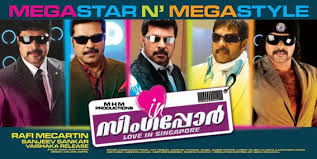 A love story starring Mammootty prancing around in leather outfits in Singapore, I presume. There's even a fashion show where M struts his stuff - (s)exciting, huh?
 Suresh Gopi in yet another 'different' role, this time as a sanyasi detective - bet even Agatha Christie couldn't have thought of this one.
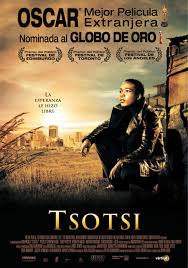 Dileep (Mulla) is a hardened criminal, who is forced to care for a baby. Within some days, the baby changes his behavior, arousing and developing the sense of empathy and humanity in the cold blood killer. Very, very original.
The English Scholar Award:
Move over, Suresh Gopi and Mammootty - M.G.Sreekumar is here. With buzz words like 'Audien' and 'Criticization', rumor has it that Renji Panicker is planning to cast M.G.Sreekumar in his latest abusive saga of cussing, swearing, and filpping the bird.
Best Director:
Balachandra Menon for De Ingottu Nokkiye (roughly translated to Hey! Look Here!). Not content with writing and directing this neo-classic, the director also appeared on several channels accusing others of 'chopping' his creation. Never miss a trick for publicity, huh?
Comeback of the Year:
Jayaram should have been a cakewalk for this reward; he had his first post-millennium hit, riding on the petite shoulders of Gopika, and worked hard to revive some of his old mimicry tricks.
However there was another unexpected comeback in 2008 that had audiences whistling in joy, and dancing in the aisles. Yes - I am refering to the one actor in the history of Malayalam cinema who encompassed all emotions into one expression; who modulates his dialogue delivery like no other; who screeches like a jackal when delivering the only authentic karate kick of Malayalam cinema - none other than Babu Anthony in 20-20.
Performances of the Year:
Mohanlal in College Kumaran lends new expression to the word sleepwalking. In a role he is clearly disinterested in, Lal barely goes through the motions - leading to the question why exactly he signed the movie.
Mammootty in Annan Thambi on the other hand, is loud, ebullient and thoroughly irritating - I almost prefered the sleepwalking Lal. I can at least figure out why Lal walked through CK in a daze; but why Mammootty invested all his energy into a movie as inane as AT defies logic.
Old Wine in New Bottle Award:
Unanimously to Sathyan Anthikkad for re-inventing, re-polishing, re-painting, and re-selling the same wheel over and over again.
Monday, January 19, 2009
Slumdog Millionaire
It is indeed funny how Hollywood cinema seems to have taken a fascination for all things Indian over the last 5-6 years or so. Using Indian songs as playback scores for various big budget Hollywood disaster movies etc, over-hyped Broadway Shows such as Bombay Dreams (hope that the Broadway version of LOTR will not be as amateurish) that dare to claim partial ownership for ARR's soaring global popularity today, Bollywood actors (other than Om Puri, I mean) being cast in decent roles in Hollywood movies, studios setting up big time to produce Indian films ...- the Indian cinema industry has never had it better. Indian cinema is hot in the global market right now - and SDM makes its entry just the right time.
Many have attacked SDM for taking potshots at the underbelly of India - riots, poverty, beggars etc. Although there is a ring of truth to these accusations, there is no denying the fact that the unique plot, screenplay and above all the director Danny Boyle's vision makes SDM a very refreshing movie experience (perhaps not all that it is being made out to be right now, but a very fine movie neverthless). Also, in defense of SDM, showcasing India's poverty and hardship of life is not at all the intent here, unlike other movies like Salaam Bombay, Fire etc (although I did find Salaam Bombay just brilliant); SDM is basically an 'underdog-truimphing' movie. I guess the plot device is pretty much familiar to everybody by now, but for the uninitiated - SDM narrates the tale of Jamal who is in the 'hot seat' of KBC having answered all but the final question, much to the increasing chagrin of egoistic and insecure anchor Prem Kumar.
There are quite a few scenes in the movie that stood out for me- a young Jamal wading out through a pool of shit to get an autograph of Bachchan, the idol of Lord Rama amongst the riots, Jamal reeling off tales made on the spur of the moment with just enough real historical figures thrown in to wide-eyed gullible foreigners, the hilarious reference to the practice of chappal stealing prevalent across every single religious / tourist institution in India, Jamal's euphoria on rescuing Latika turning into hot white anger and then despair as his brother then takes claim over her, a couple of repartees Jamal throws at the hapless constable (Sourabh Shukla), the bathroom scene with Prem Kumar - I could keep going on, which pretty much indicates how I felt about the movie, I guess!
SDM owes a lot to casting director Loveleen Tandan, who gets the best actors for the parts - especially the child actors who are just brilliant. Dev Patel is extremely good as Jamal - he looks the right age, and has the right disarming underdog quality that makes one root for him. Anil Kapoor could have been better, I thought. Irffan Khan is pitch perfect (when is he not?). The standout performers for me, though, were young Azhar and Ayush who played the young Salim and Javed respectively - their innocent faces and reactions pretty much made the movie for me. As for ARR, honestly he has done much more impressive work in India - neither his b/g score nor the songs can hold a candle to the kind of work he has already done in Dil Se, Rang De Basanti, Lagaan, Iruvar, Minsara Kanavu etc - just goes on to show that some things take longer to change after all, I guess :).
Verdict: Extremely good, a must-watch.
Monday, January 05, 2009
Paradesi (Foreigner) - Review
 It is after a long time that one sees Mohanlal really sink his teeth into a role worthy of his talent. Although 'Paradesi' ends up being a tad disappointing, the performances alone make this movie a worthy watch.
As the title indicates not-so subtly, the tale is about Indian Muslim expatriates who live a life of misery and fear ever since the partition. Instead, the director opts to iterate through a string of characters, tracing their lamentable history through the weary eyes of Moosa (Mohanlal). Despite being treated to a virtual acting exhibition by a list of Malayalam actors, being subjected to different variations of the same story again and again does take its toll on the viewer. A little bit of subtlety would have gone a long way in raising this film to another level altogether, I couldn't help but think.
In what ought to have been a landmark role, Mohanlal is curiously apathetic as the young Moosa - lackluster would be the one would be tempted to use if it were not for the marvelous turn Mohanlal turns in as the aged, harried Moosa. In both body language and voice modulation, Mohanlal is the aged Moosa personified - the one drawback is the apparent inability to imbibe the Malabar slang. Paternally affectionate with the young journalist, pensive as he discusses legal matters with the policemen and lawyers, despairing as he is banished yet again, cringing and pathetic as he attempts to hide from the policemen - there is apparently no emotion that Mohanlal cannot conjure up for Moosa. It is a pity that Mohanlal the actor is constantly drowned in tripe like Madambi and Hello.
Shweta Menon is truly a surprise as Moosa's wife, Aamina. It is a shocker of a performance - made all the more effective more by sheer shock value than actual histronics, one suspects. But nay; the very thought is cruel and unfair to an extremely competent Shweta.
There are quite a few effective cameos in the movie - Jagathy, Sidhique, Padmapriya, T.G.Ravi, Cochin Haneefa etc. Jagathy yet again reveals what an outstanding talent he really is - after the likes of Mazha and Nottam in recent times, he chews up the scenery as the mentally unhinged Abdul Rehman. It is a pity that this fine actor is more often than not relegated to asinine comic roles. The Lakshmy Gopalaswamy story was not effective though, and the stark depiction of police brutality was completely uncalled for. The akwardness between Moosa and Khafija was a deft touch - all the more so since it left unexplained.
It is directorially that the film falters. All the stories / characters are but clones of one another, and one could see the end coming a thousand miles away (though Mohanlal reserves his best for the final few scenes). A dash of subtlety and some firm editing might have done wonders to make a good film better.
Verdict: Laudable effort, but could have been so much better.
Monday, July 07, 2008
10-avatharam: Atheism, Religion, Chaos Et Cetra
As a self-confessed, unabashed Kamal Haasan fan, I look forward to his movies with a great deal of interest and curiosity: what will the man do next? On that note, perhaps Dasavatharam was bound to be a disappointment; for here was a movie where the gotcha factor was no longer present. Despite that, I hoped that Kamal's exemplary story-sense and screenplay writing skills (his outings as a screenplay writer feature the likes of Guna, Mahanadi, Thevar Magan, Anbae Sivam and Virumandi) would somehow justify this whole gimmick. Alas, that is not the case either. IMO Dasavatharam is merely gimmicky, and also shockingly unintelligent.
First the positives: some of the action sequences and special effects are extremely good. The whole Nambi sequence is superb, but also detrimental to the movie as a whole since it raises your expectations (btw, with the whole skin-piercing thing and all that, Kamal takes yet another cue from Mel Gibson's book of torture). The various cues to mythology (especially the characters of Vincent Poovaraghan, Gothai/Andal and Govind) also work, though I do not lend credence to the emails being floated around linking every role to an incarnation - that's just taking things too far. That said though, there is an effort by Kamal to tip his hat to the mythology, as can be seen in Vincent Poovaraghan's entry and death scenes, the throwaway scene to the monkey named Hanu, strong hints that the characters of Aandal and Govind are but re-incarnations of Gothai and Nambi etc). And of course, as with other screenplays by Kamal, the names of characters tell a story of their own - Gothai/Andal & Govind, Govind's father is Ramaswamy Naicker, the monkey named Hanu etc for instance. Some of the dialogues are pretty good too; sample this for instance:
Now for the negatives:
For a lot of the roles, the makeup was quite bad - the role of Krishnaveni patti being a case in point. Unfortunately, the patti is nowhere near as endearing as Shanmughi-maami was; she is pretty irritating most of the time, and without the baggage of the 10 roles funda, would probably have been chopped off at the editing table. The same goes for the role of Bush (though the makeup was marginally better), despite the attempt to be cute with utterances of nucelar in a lousy accent. But the worst makeup was certainly for the guy on stilts, he looked like something out of LOTR - the absolute pits. Was there a 'foot in mouth' reference somewhere in the introduction scene, btw? I think there was, bu did not quite the context there.
The next casualty is the screenplay. The one thing I expect from Kamal is a compact, intelligent screenplay. Much to my dismay, Dasavatharam had gaping holes all over the place. Despite the whole idea of the movie being fashioned around the 10 roles, I expected Kamal to tie together these roles in a much better way. For example, MMKR had the 4 roles bound together in a tight, cohesive screenplay. From forced humor (Kamal tries too hard to imbibe the Crazy Mohan style of wordplay here, maybe he should search for his own brand of humor) to utter tripe (the Hiroshima-Pearl Harbor reference was just pathetic), Kamal the screenplay-writer stoops lower than ever before. Also, there is an attempt to be cute by trying to invoke the butterfly effect etc - its once again nothing more than a gimmick, especially with the fluttering butterfly on screen; they could as well have erected a stupid board that said 'Butterfly Effect in play here' or something. Subtlety is something that the whole movie seriously lacks, I am afraid. And of course, Kamal needs to stop harping on the same topics film after film - religion, atheism, idol-worship, hypocrisy - its become darned boring and repetitive. He needs to write a movie that talks about none of these things!!
The performances - nothing to write home about. Each of the 10 roles Kamal does is reminiscent of something that he has done before. With the possible exception of the Nambi character and the Telugu guy (who was pretty much the same character as SPB's CBI character from Guna), every other portrayal is a letdown from the lofty expectations one holds for a Kamal movie. Even the supporting characters have nothing much to do, once again unlike other Kamal screenplays. Asin is a far cry from her charming Ghajini-self here; annoying and shrill as hell, the only laudable aspect of her performance is that she manages to evade the 'clutches' of Kamal :).
The worst part of the movie, though, had to be the whole cancer-curing episode. At a time when even Rajni-Mithun jokes about such things are stale, this was an absolute cropper. It wasn't even a tongue-in-cheek kind of thing, which is what makes it even more cringe-worthy. Crap like this happens in Rajnikanth movies, not in Kamal Hassan ones!!
I might be too harsh on the movie, you could argue. For instance, while Mohanlal dons the shoes of the caring brother for the umpteenth time in a Balettan and a Madambi, and Mammotty exalts his newfound comic skills in utter tripe like Annan Thambi and Thuruppu Gulan, surely Kamal Hassan is afforded a Dasavatharam - especially after a good movie like Anbe Sivams at the B.O. But that is precisely why ones admires the heck out of Kamal Hassan - he is the one actor in the industry who refuses to compromise, irrespective of B.O success. When even Kamal compromised and assembles something like Dasavatharam with a clear eye at the B.O, it certainly is a disappointment in my book. Let us hope Marmayogi has no more compromises from Kamal !!
Sunday, June 15, 2008
Movie Review: The Kite Runner
'The Kite Runner' by Khaled Hosseini was of the finest books I'd read in the last 10 years or so. Hence, it was also one of the film adaptations I was eager to check out. It's been in my Netflix queue for a while now, but when I found a copy in the public library, I couldn't resist. After watching it twice, I can't help but conclude that its a pretty good adaptation, although it still is several notches below the extremely poignant novel.
'The Kite Runner' is primarily the tale of two friends from Afghanistan, Amir and Hassan, told through the eyes of Amir. In the story spanning about 20 years, one sees how the Afghanis have had to suffer, and how the country is faced with one difficulty after another. The narrative does not hold back on its criticism of the Taliban regime either, and is brutal in its indictment of the cruel, inhuman 'beard regime'. However, all this is in the background, and rightfully so; this is basically Amir's story, and how he succeeds in redeeming himself - in his own eyes, in the eyes of his beloved Baba, and most importantly, in the eyes of the best friend he has ever had.
I will not attempt to write down the story here, because (a) there is no way I can even try to summarize such a beautiful book in a paragraph or two; it would be a complete degradation of the book, and (b) for those who haven't read the book, but will see the movie, it would destroy a large segment of the movie for you. Rest assured though, that despite all the suffering the protagonists undergo, there is light at the end of the tunnel.
Homayoun Ershadi as Baba towers over the cast. He was exactly like how I had imagined him from the book - proud, sophisticated and wry. His intolerance toward the wrath-espousing mullahs, his bouts of temper, and his fragility once he becomes old and ill are all brilliantly brought out by the actor, but with subtly. Its easily a role that could have been enacted like poor Bachchan did in 'Khudah Gawah', high-handed, loud and overblown, but kudos to Ershadi in portraying the proud Baba in his own style. Its a remarkable performance, and worthy of quite a few awards this year.
The child actor who plays Hassan turns in a remarkable performance too. Every slight by Aamir is reflected in his crestfallen eyes, never more than in the scene where he crushes a ripe tomato on his own face, still refusing to turn upon his friend. Its perhaps unfair to judge him against the book, but once you do, despite some great acting, he falls short.
Everybody else is competent enough, and no actor is visbly bad. However, several scenes like the redemption of Amir, the return of Assef, and Sohrab saving Amir don't have the necessary impact, and this is clearly the director's fault. Perhaps a story like this needs a wee bit of melodrama - everything seemed a little too flat here. But in the director's defense, he does make several scenes like the kite-flying competition, and the stoning to death extremely well. He really does do a commendable job of converting a modern classic to celluloid; but as an avid fan of the novel, I can't but help nitpicking.
All in all, a half-decent movie, but not as good as the book.
Saturday, May 31, 2008
On My Playlist
Kahin To Hogi Woh... from 'Jaane Tu Ya Jaane Na', a love ballad sung by newcomer Rashid Ali (where on earth does ARR find all these awesome new singers?), and Vasundhara Das who finally breaks out of the item number rut she's been stuck in for a while. My gut tells me this is destined to be the new-age Pehla Nasha... if its picturized well.
Kabhi Kabhi Aditi Zindagi... from 'Jaane Tu Ya Jaane Na' has super-hit written all over it; most ARR numbers require a lot of listening to before you get to like it. Kabhi Kabhi Aditi Zindagi..., like the other insta-ditty from ARR Enrendrum Punnagai... from 'Alaipayuthey', is mind-bogglingly addictive. ARR ought to let down his hair and indulge in these hip numbers more often; he's been stuck in the 'Swades' and 'Jodhaa Akbar' mode for a while now (not that I don't enjoy those either, 'Yeh Jo Des Hai Tera' and 'Khwaja Mere Khwaja' are amongst my favorite ARR songs). Rashid Ali does a repeat here, and he's got a lot to thank ARR for.
Meherbaan from 'Ada' makes it ARR thrice in a row. ARR singing is increasingly becoming more and more common unlike say, 5 years ago, and it is quite possible that I might get tired of listening to him croon song after song. Right now, however, his high-pitched, slightly nasal voice is undiluted music to my ears, so much that I even listen to the likes of the 'Jaagenge...' from 'Bose: The Forgotten Hero' (and that turned out to be quite an inspired choice of the name, I have to say!). Btw, this is such an awesome album, and so is 'Tehzeeb', never mind their status at the B.O.
Mast Kalandar from 'Hey Baby' is a wild song, totally. The nasal, slightly whiny voice of the main singer takes nothing away from the sheer energy of this number. Even the fact that the picturization of the song was no great shakes (despite the presence of Akshay and SRK) couldn't prevent this one from busting the charts.
Engu Ninnu Vanna from 'Calcutta News' is a very nice song, albeit a little old-fashioned. Madhu Balakrishnan has made a career for himself on the nostalgia factor of Keralites, and he does the same here (and this is not taking away from his considerable singing abilities at all). Veteran Chitra easily dominates the song though. The video sucks big time, with Dileep trying hard to pass off as an intellectual, but only succeeding in trying to look like a bad hair gel commercial.
Hawa Sun Hawa from 'Ada' is the typical Rahman song that takes ages to get used to, but once you do the tune refuses to get out of your head. Its easily one of the better duets Sonu and Alka have sung together. Somehow, the tune reminds me of the neglected Khamoshiyaan ditty from 'One Two ka Four', but hey that could just be me.
Hare Raam Hare Raam from 'Bhool Bulaiyya' is probably the most infectious track in the past few years. Even my horror at what old Priyan had done to poor, old-fashioned Manichitrathazhu couldn't stop me from nodding my head to the rollicking beat of this one. Akshay, for all his faults as an actor, is extremely good at most song picturizations, and he doesn't put a foot wrong here.
Monday, May 19, 2008
Aparan: The Other
Back after a brief hiatus - was in Kerala for a vacation, and more importantly, for my sister's wedding. It was almost more hectic than regular office hours, but then that's another story. A couple of days before returning, I landed up at the familiar doorstep of Empire Videos at Poothole, and successfully procured a couple of Padmarajan DVDs. Its been a long time since this post, and I'd decided to re-visit some of these masterpieces anyway - especially the ones I haven't seen in a long time.
Aparan (The Other) narrates the rather sinister story of Vishwan (debutante Jayaram), who's forced to come to terms with the fact that he has an unsavory lookalike. He comes to know of this in an unexpected manner, when he is attacked by two strangers at a hotel. The police refuse to buy his explanation that he's an innocent bystander, and Vishwan is hauled off the nearest police station. By sheer chance, the inspector in charge happens to be an old friend (Mukesh), and Vishwan is released. After some more unpleasant incidents that result in Vishwan losing his job, he is forced to seek out his so-called 'twin' to confront his nemesis. Little does he know, though, what fate has in store for him.
As usual, Padmarajan writes an extraordinary screenplay . Many scenes stand out - like the one where Shobhana accuses Jayaram of trying to molest her, the scene when Jayaram 'becomes' Uthaman and claims money for a murder cold-heartedly, and of course the chilling climax. Like many other screenplays by Padmarajan, this too contains several layers. One aspect to the screenplay, of course, is the age-old adage that good and evil are but two sides of the same coin. In fact, I felt that this was the central premise of the move. Despite not showing the 'other' character until the very end, his shadow hangs over the entire movie, like an undercurrent of evil. Its incredible how Padmarajan manages to bring in this 'dark' feeling without resorting to familiar devices like dark lighting, loud music etc; he achieves it nevertheless.
Another aspect to the movie is how easy the protagonist finds it to 'change' his persona to that of his lookalike, the antagonist. There's a scene here, where Jayaram tries to hang around shady localities, dress in dark colors like his lookalike, and even leer at women. I thought this could have been done much better - by the director himself, by the music director in particular (who chooses to put in some dumb rock 'n' roll music or some such crap as the BGM), and of course by Jayaram. In fact, the possibility of the scene reminded me of the 'mirror' scene in Mohanlal's Chenkol (The Staff); Mohanlal expresses, almost magically, both the demons in his mind that are threatening to break free, and the sheer helplessness as he feels his life succumbing to fate once again (its truly a magical scene, and one of my favorite Mohanlal scenes, ranking right up there along with the 'murder' scene in Sadayam - With Mercy). Of course, Mohanlal has forgotten more about acting than Jayaram ever dreamt of, so that's no just comparison. However, I have to admit, this was one of the scenes in the movie that disappointed me. The blurring of the lines between good and evil could have more imaginatively done, IMHO.
Note: Spoilers below.
But Padmarajan more than makes it up with a great, great climax. With the antagonist dead, Vishwan is now free of his nemesis, his lookalike. However, he chooses to live the life of his 'other, abandoning his life until now. His motivations are unclear - is it because he fears that Uthaman's accomplices will hunt him down? If so, why does he then smile pityingly at the burning embers of Uthaman? Does this mean that Vishwan has succumbed to the shadow of evil cast over the movie? Jayaram gets the creepy, sinister smile just right, and Padmarajan has once again succeeded in creating a haunting climax.
Performances: the movie belongs to Jayaram. In fact, it wouldn't be far fetched to say that this is the finest performance in Jayaram's career. Madhu impresses in his usual role (There's a deft director's touch applied to Madhu's character as well; one of the initial scenes shows Madhu gently flirting with a neighbor. Later, when the lookalike surfaces, Jayaram is highly suspicious of his father, especially given his nature). All the other actors are competent, but nothing to write home about. Its almost a multi-starrer though, with Mukesh, Shobhana, Parvathy, Shari, Jagathy, Innocent, Soman etc in the movie. But certainly, its Jayaram who has the meaty part here, and he makes the most out of it.
This certainly doesn't rank up there with Padmarajan's best movies like Namukku Parkkan..., Thoovanathumbikal etc. However, the deft touch of Pappettan's baton is evident throughout the movie, and that touch has seldom produced an outright bad movie. Aparan is well worth more than one watch just to analyze, admire and fondly remember, albeit with a bit of sadness, the famous Padmarajan touch.
Tuesday, April 15, 2008
Film Review: Anjaathey
Whenever I champion the quality of cinema being produced from the youth brigade of Tamil and Hindi cinema, I am greeted with incredulous, disbelieving, and even contempous expressions. But its true - while Tamil cinema can boast of Kaathal, Paruthiveeran, Veyyil, Kathrathu Thamizh and even Pithaamagan in the last few years, while Hindi cinema has an eclectic oeuvre in Black Friday, Bheja Fry, Maqbool, Ek Chalis Ki Last Local, Johnny Gaddar, Omkara, Mithya, and The Blue Umbrella in recent years, Malayalam cinema has little to boast of, at least from its youth brigade, if one exists (we have a grandfathers' brigade for sure, though!) Myskin's Anjaathey is a worthy addition to the list of Tamil films quoted above.
Take the whole opening sequence, for instance. Its just another stunt scene, really. But the director places a camera on the ground, and instead of moving the camera moving around to cover the characters, has the characters move in and around the camera. The only parallel I can think of is in Kamal Hasan's Apoorva Sahodarangal, where a camera is placed in a trench, and we see a car stopping, and people (their feet, rather) getting out. Its slightly gimmicky, certainly, but an effective way of raising curiosity, one has to admit.
The tale is but a variant of the ages-old story of two friends, one a cop, and the other a goonda. But the whole role-reversal thing out here (you see, Narain is the goonda who later becomes the righteous cop, and Ajmal the self-righteous hero-type who later turns amoral due to a perceived failure in life) makes for a nice twist. And of course, the casting of the hitherto soft-spoken Prasanna as the scenerey-chewing serial rapist makes for a decidedly wicked turn of casting. As with all other good movies, there's a whole bunch of other characters who could have been merely incidental in other movies, but are more than relevant to the proceedings here. Fo instance, there's the one-handed gullible friend Kuruvi, Ajmal's sister who has a crush on Narain (which is brought out ever-so subtly), the old flower-seller, the father of the kidnapped girl - in fact, almost too many to count - and each one of these characters is given at least one crucial scene (its almost as if the director told these actors while casting them, 'hey, you have one scene to yourself, so make the most of it').
What I liked here was that the director had a clear vision. He takes almost every single cliche in the book - the two-friends saga, son redeeming himself in father's eyes, friendship, sacrifice of the friend, cops versus villains - and re-works them, until they take on a decidedly different form. Most of the time, the hero is merely incidental to the proceedings, and is forced to the sidelines while all these catastrophic events take place around him.
Performances are uniformly good. Prasanna, despite being burdened with a weird wig, underplays his character, and in a marked departure from his usual chocolate-boy roles, manages to be a menacing villain. Ajmal makes a neat debut. Narain is a little rough around the edges, but its also that kind of role - a rookie cop in a tough investigation - and he makes no glaring mistakes. However, at the end of the movie, its undoubtedly the director's vision that makes Anjathey a treat to watch. Full marks to Myskin.
Verdict: Extremely good, falls just short of greatness.
Friday, March 21, 2008
My New College: JanakiParvathyShakuntalaDamayanthi College of Education
Links courtesy HawkEye
Looking at how popular colleges like these are, I have decided to begin my own college in Chennai: Shree JanakiParvathyShakuntalaDamayanthi College of Exemplary Education. This will of course be a 'mixed' college, but also be a carefully 'controlled' environment so as to extol the finest virtues of discipline and self-control amongst students.
As Chairman, Counselor and Principal, my rules will be these:
a. All college buses will have two entrances - one for boys and the other for girls.
b. The buses will have a central partition, so that not even a carrot can be shared between the two sexes.
c. All girls should obligatorily carry an umbrella with them at all times (black in color).
d. When climbing up/down on stairs, girls should have their umbrellas open, so as to deter all eyes.
e. Furthermore, all girls should have their dupattas fastened with no less than 50 safety-pins at all times. This will be subject to random inspections, and anybody found with a number of pins lesser than the minimum will have to undergo punishment.
f. All HODs will be provided special mopeds /TVS Scooties so that they can roam around campus during 'free periods', and look around for offenders. Offenders will be punished harshly, and repeat-offenders will be dismissed.
g. Within the classroom, girls and boys will be separated using a one-way mirror partition on both sides. Each classroom will also have different entrances.
h. Girls (and boys) are forbidden from wearing makeup. At the most, kajal can be used.
i. No 'western' cultural programs will be allowed. Western Dance, Light Music, Skits etc are not allowed during cultural festivals. The only items / competitions permitted are classical dance, Bhajan competition, and skits from the Ramayana or Mahabharata.
j. No skit should have girls and boys participating at the same time. The dupatta rule applies during skits as well.
k. During competitions, cheering, catcalls, whistling etc are not allowed. At the end of every event, the event coordinator will lift his/her hand signalling permission to clap. The audience has to clap then, and only then.
l. Attendance for all competitions are mandatory.
m. Girls are not allowed to participate in sports events.
n. Girls are not allowed to view sports' events held for boys.
o. In the girls' hostel, the dupatta rule must be followed whenever there are any visitors.
p. In the visitors room of both the girls' and boys' hostels, all occupants must have both legs on the ground at all times.
q. All hostels will have speakers on the ceilings, which will start playing bhajans at 4:00 AM, and 6:00 PM. All lights in the rooms will be automatically switched on at this time as well. If any speaker is damaged, all occupants of the floor will be suspended.
r. All hostels will have a TV room. The TV will be locked in a glass case, and the hostel warden will decide what channel is to be place. The TV remote would be in the custody of the hostel warden at all times.
s. College tours are not permitted.
t. Hostel residents should be within the college campus by 6:00 PM.
Can't think of any more, going off to sleep !!
Sunday, March 16, 2008
Apocalypto: Film Review
As directors, there's more than one similarity between Mel Gibson and Kamal Hassan; both of them are talented and ambitious story-tellers with unique visions, both of them have a penchant for violence (of the gory kind, where blood sprays from the throat, and spears jut through flesh with the sickening sound of metal meeting flesh), both of them are comfortable tackling risky and controversial topics - so on and so forth. Oh, and neither of them shy away from making the odd sexual innuendo even in the most serious of movies. But neither of them are completely there as great directors, though both of them certainly having the making of great directors. Their respective directorial ventures, though certainly different from (and mostly a notch above) the run-of-the-mill stuff, and often featuring breathtaking moments / scenes, often fail to reach the heights that you'd expect they would. 'Apocalypto' is no different in this regard.
At its heart, 'Apocaypto' is a 'chase' movie. Of course, the director's conceit is that it is set amongst Mayan tribes, and hence offers a fresh (and rather interesting, one has to admit) look at an age-old cinematic concept. The film's hero, Jaguar Paw, who is probably an ancient ancestor of John Rambo, is snatched away from a joyous existence with his tribe, and hauled away to a 'modern' city where he is to be sacrificed before the sun-god, with a witchdoctor and a crowd-baying-for-blood in tow. This pretty much makes up the first half of the film, and the rest is about Jaguar Paw making his way home to his pregnant wife and son, who are stuck in a well.
It is entirely to Gibson's credit that he almost makes this work. The entire portion of the movie leading up to the siege of the village is the Mayan version of what a Sathyan Anthikkad, or a Bharathiraja regularly portray. Of course, the whole sequence about the aphrodisiac is more like from a '90s David Dhawan flick, but the bit about the young wife washing her mouth totally cracked me up. The invasion of the village, the killing of Jaguar Paw's father, and the whole sequence with the women is pretty brutal (especially the one with the woman who resists). The violence is unflinching, and the grueling journey from the village to the great city is beautifully picturized.
Unfortunately, the move lets you down in the second half. After the awesome escape sequence, and the breathtaking sequence with the jaguar, the move heads steadily downhill and never recovers. To somebody fresh from the horrors of watching Rambo muttachan (grandpa) gunning down people yet again, the hide 'n' seek in the jungle holds no new aspects. The insertion of gruesome violence yet again does not help the cause either. The only bit of suspense is about the wife stuck in the well, but by then you are beyond caring - there have been too many heads rolling down the steps, throats slit, people bitten by snakes, veins cut, heads hammered...you get the picture.
Like I had said earlier, the Gibson-Kamal connection is something that I have felt earlier too (though I think Kamal fancies himself more as a desi Quentin Tarantino). A lot of the imagery here reminded me of Virumandi - the haunting image of a woman stuck in a well while there's a massacre going on around her being the most pointed image, of course. Another point, IMHO, was the unnecessary use of gruesome and at times sadistic violence - as the best movies so often remind you, what's left unsaid and unseen often has the most impact, and its never more true than in this movie.
The Special Features section of the movie is a virtual feast. The amount of research they have put into the movie is staggering, and that would be an understatement. The tattoos, jewelery, clothes, hairdos, architecture, religious beliefs and the weapons - oh yeah, definitely the weapons - have been painstakingly researched. The technical team is so good that they just suck you up into the ambiance of the movie. The rain-forests look awesome, and the camera work is unobtrusive, yet fantastic.
In short: A great watch, but not for the faint-hearted.
Saturday, February 09, 2008
Shit's The Word
Since 'Rowdram' and 'Sound of Boot' have just been released, I thought it would be apt to run through what would typically runs through the minds of the likes of Renji Panicker and Shaji Kailas when planning a new movie.
The Hero: Suresh Gopi, Mammootty or Mohanlal. If its either of the first two, they can be educated from some fancy-sounding school outside Kerala (and mouth epithets like shit, crap, bullshit, damn etc in every couple of sentences), and also be the son or grandson of some retired honorable politician whose roaring days are over, thanks to backstabbing partners (who the hero can abuse during a later scene). If its Mohanlal, he's probably an orphan who migrated to an outside state/country when his parents were killed, and picked up classical music along the way. And yeah, a music composer needs to be hired as well - fit in a classical or semi-classical song somewhere. Otherwise, ominous-sounding background music would do (what are Enigma CDs etc for?).
The Heroine: Optional, only for eye-candy. Should be pretty, knowledge of English preferable (since there's only one female dubbing artiste in Kerala, who's knowledge of English would rival that of a kindergarten kid). Make her an honest government servant, like an policewoman, or a collector or sub-collector. Should be tough, but marshmallow in the hero's hands once he's called her a 'bitch' or something else equally derogatory.
Crony of Hero Who Dies Just Before Climax: Biju Menon, Tony or one of the new young blokes whose debut films have flopped. An orphan who the hero accosted in his childhood and brought home. Faithful companion, insert scene where crony cries and remembers his gratitude to hero.
The Betrayer: Pretty much the same as the crony, except the betrayer is money-minded (insert scene where the hero affectionately chides him for being so darned money-minded). To add insult to injury, this character has to suffer through the verbal diarrhea of the hero (insert couple of Sanskrit shlokas if Mohanlal, hire Sanskrit professor for 2 days of shooting) before being killed.
Hero's Father: Either a garlanded photograph on the wall, in which case an affectionate mom is mandatory, or some veteran actor like Madhu or Janarddanan who makes all the appropriate noises.
Hero's Mother: Mandatory only in certain cases, as outlined above. Pretty much delegated to serving food, and to the puja room. Probably fit in a scene where she worries about her son, and the dad consoles her saying that their son is a man (as opposed to Dileep).
Poor Man / Woman Who Hero Helps: Usually, an out of work actor suitably disheveled. The character would be a victim of some tragedy, waiting for justice tearfully after being abused by the system and/or corrupt politicians and policemen. Enter the hero, who then delivers a lecture on how Gandhi said that the heart of India is with the poor etc, and promptly delivers justice.
Object of Abuse: There's hardly any other way to describe the likes of Kollam Thulasi, Rajan P Dev, Devan, Shammi Thilakan etc - placed in the movie solely to provide the hero an opportunity to mouth off. These would usually be corrupt politicians / police officers. Typical verbal attacks include being called a pimp, being accused of being the hero's father's barber (or some such) who then proved ungrateful, and at the end (or just before interval) being asked to do a countdown, or insert an external object into a hidden body part.
The Villain: Sai Kumar or Siddhique, who seem to be our only charismatic actors around apart from the 2 Ms. They have nothing much to do except drink malt whiskey, slip in an oblique reference to Karunakaran/Antony, and then summon up suitably indignant expressions as the hero indulges in verbal diarrhea yet again.
That's it, that's the formula. And hey presto, you have the latest Mohanlal / Mammootty / Suresh Gopi blockbuster ready to hit the theatres!!
Subscribe to:
Posts (Atom)

 Posts

